Pagani Remote Aviation
Virtual bush airline · MSFS 2024

Where the runway ends, we begin.

Pagani Remote Aviation flies the Kodiak 100, the Caravan and the Dornier 228 into gravel strips, mountain valleys and island runways that never see an airliner. Real backcountry procedures, real weight-and-balance, and a crew that flies together every week.

3typesKodiak · Caravan · Dornier
26missions52 scheduled legs
4regionsActive route networks
MSFS2024Simulator platform
A Pagani Aviation Group company

Flying the places maps forget

We run a virtual operation built around short, demanding legs: supply runs to remote lodges, medevac repositioning, survey crews and hunters dropped on unmarked strips. Every flight is planned like it matters, because out here there is no tower to bail you out.

Real backcountry strips

Gravel, grass, glacier and sand. Short fields with slopes, tailwinds and terrain on departure.

Contract-style missions

Cargo, passengers and charter jobs with payloads that make you think about fuel versus performance.

Weekly group flights

Fly in formation with the crew on voice, then compare landings and stories on the ground.

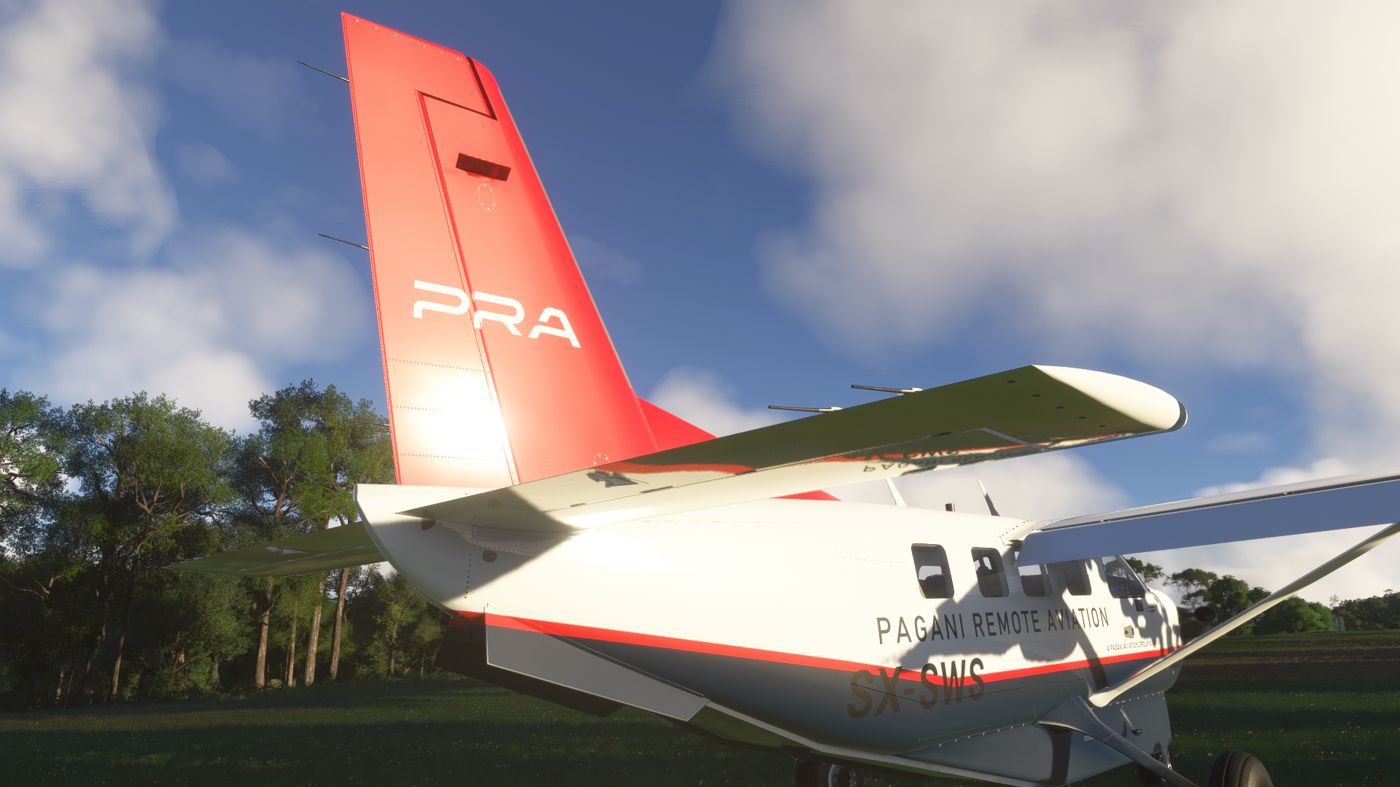
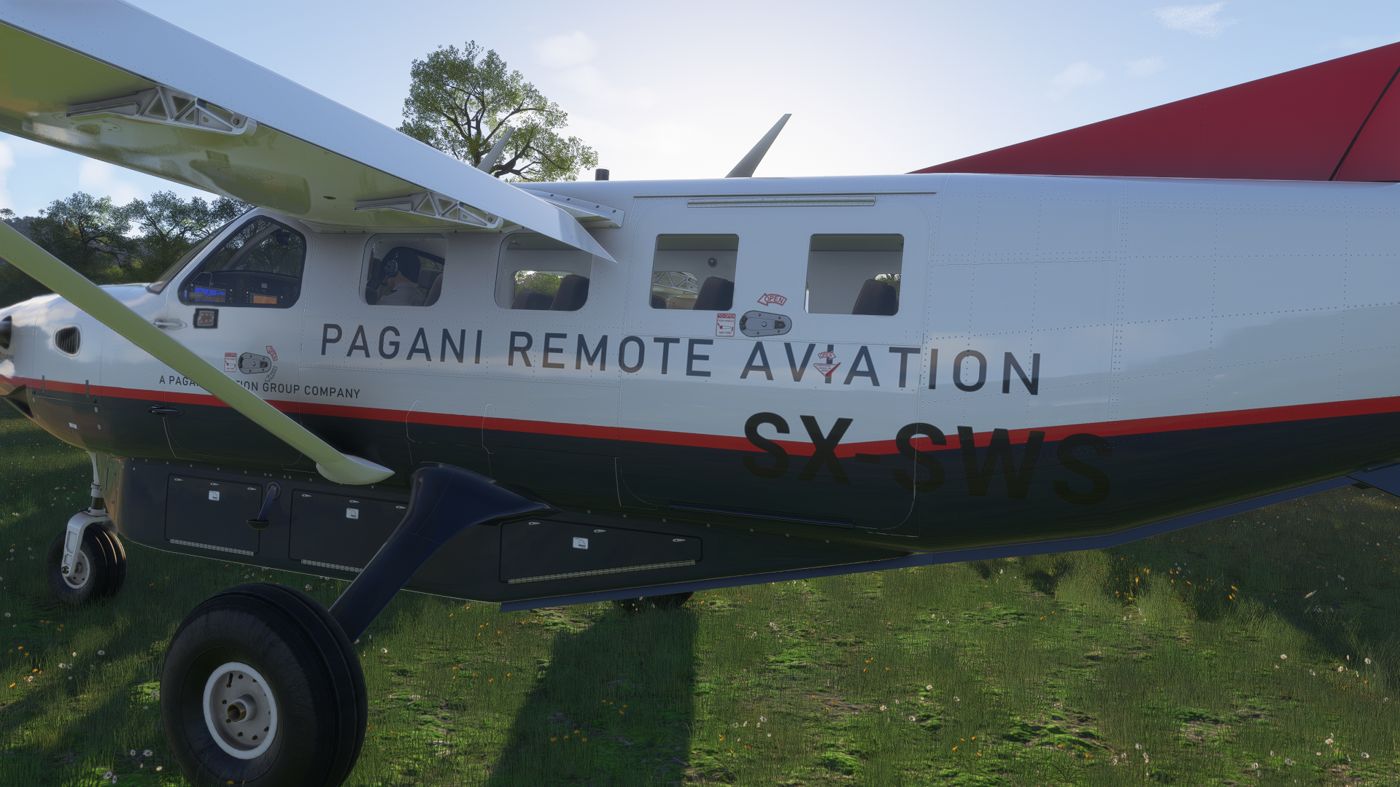
Pagani Remote Aviation Kodiak 100 SX-SWS parked on grass, side view showing the livery
SX-SWS on a grass strip · in-sim, MSFS 2024
Fleet

Three airframes. Built for the backcountry.

Each aircraft has its own job. The Kodiak goes where the runways are shortest, the Caravan hauls the freight, and the Dornier carries the passengers.

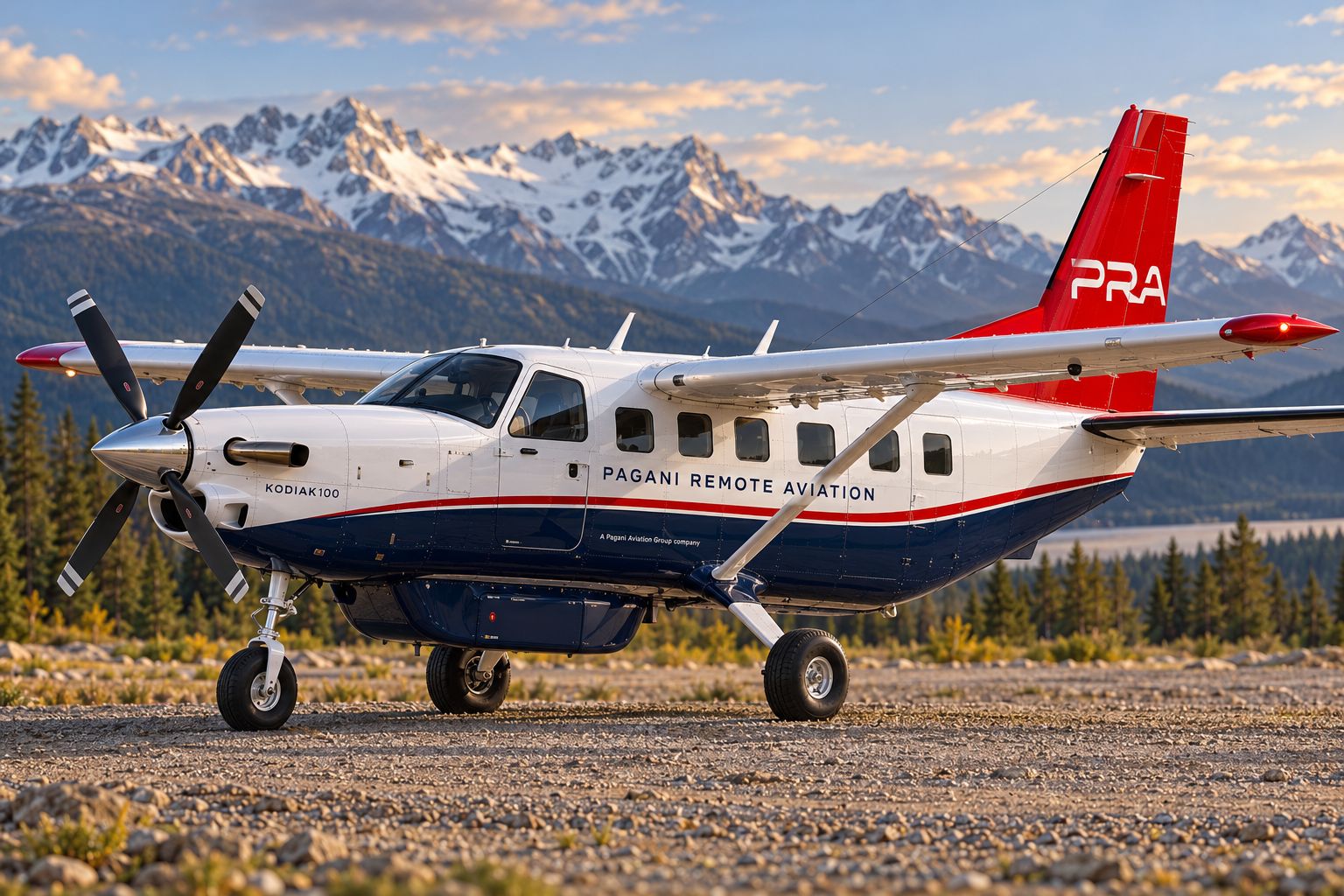
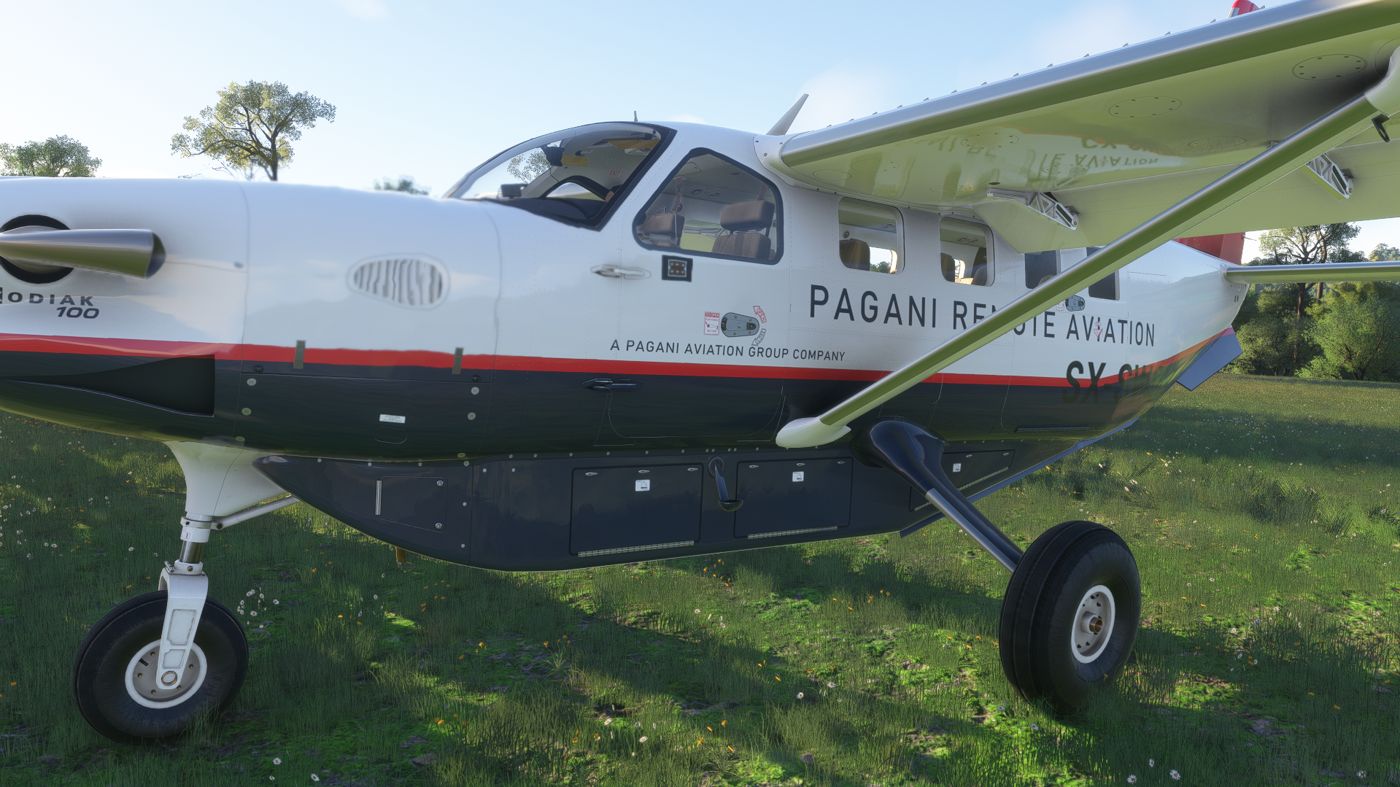
Front quarter view of Kodiak 100 SX-SWS with cargo pod
SX-SWS In service

Kodiak 100 · cargo pod · tundra-ready gear

Our backcountry workhorse. It flies the grass strips, gravel runways and high mountain fields that the bigger airplanes can't use.

Engine
PT6A-34 · 750 shp
Cruise
174 KTAS
Takeoff roll
934 ft
Range
1,005 nm
Useful load
3,530 lb
Seating
Up to 10
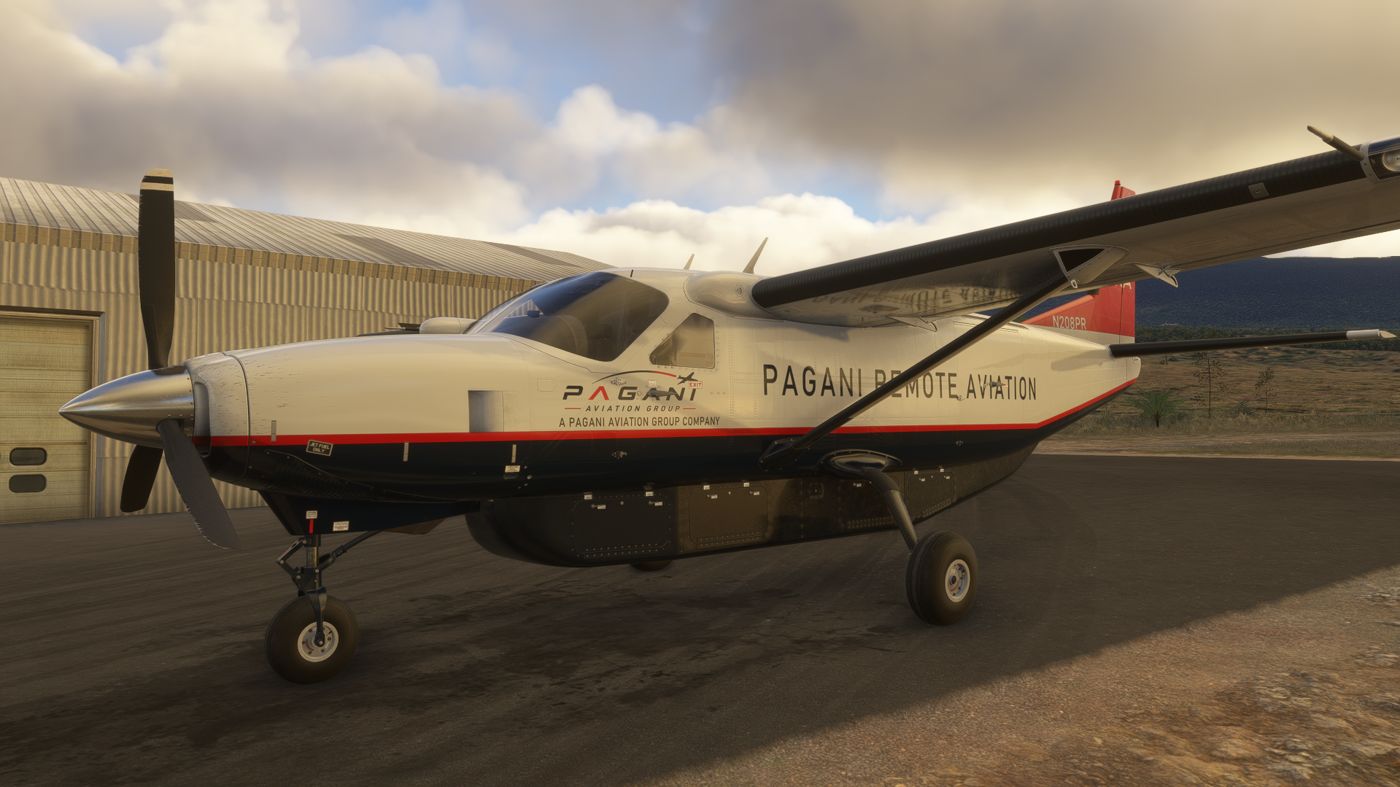
Cessna 208B Super Cargomaster N208PR in PRA livery parked by a hangar
N208PR In service

Cessna 208B Super Cargomaster · belly cargo pod

Our freighter. It flies the scheduled cargo runs: hub freight, parcels, seafood backhauls and urgent parts.

Engine
PT6A-114A · 675 shp
Cruise
175 KTAS
Range
870 nm
Max takeoff weight
8,750 lb
Max payload
3,700 lb
Cabin
Cargo only
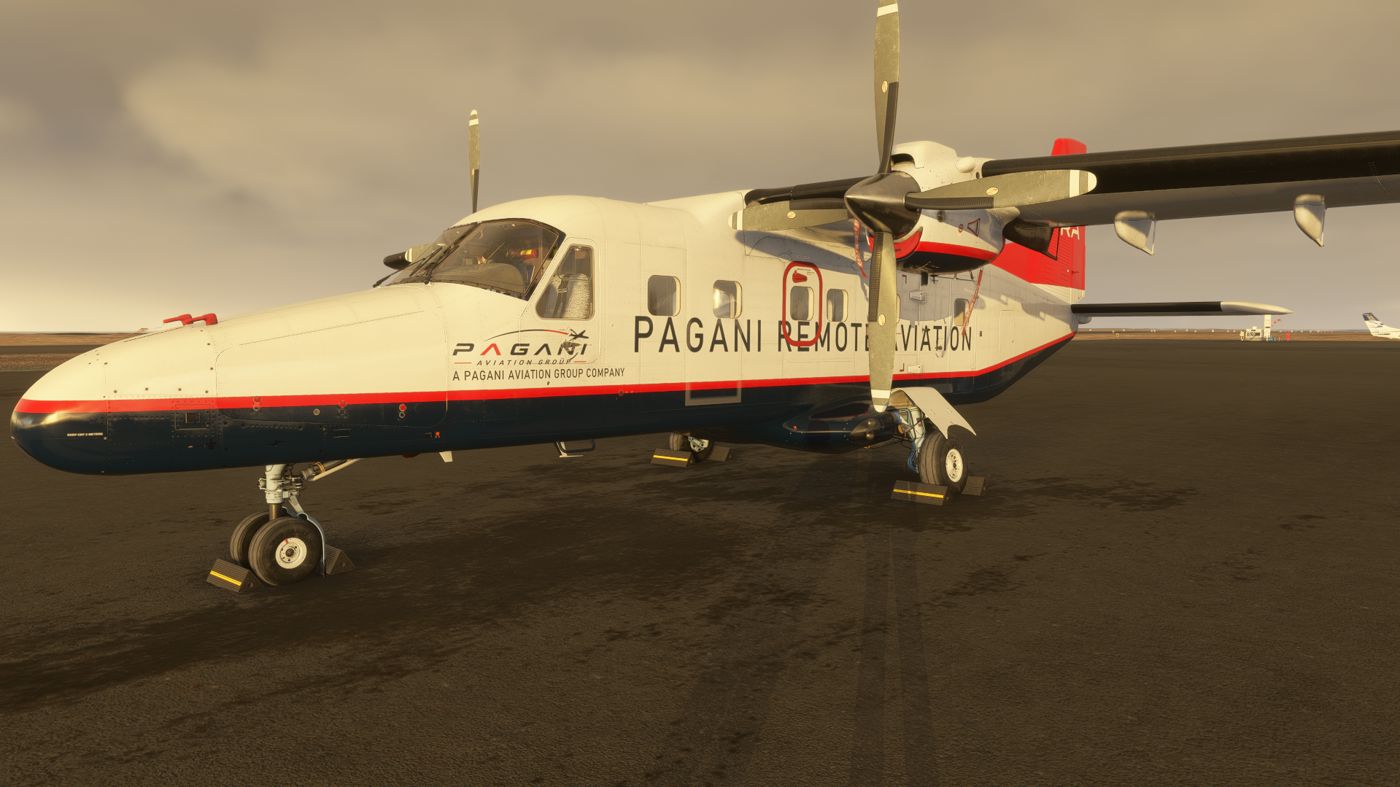
Dornier 228 in PRA livery on the ramp, chocked, under an overcast sky
N228PR In service

Carenado Do 228-100 · twin turboprop · 13 seats

Our commuter. Eleven passenger seats, two engines and short-field performance for passenger runs across water, through mountain passes and into short island runways.

Engines
2 × Garrett TPE331
Cruise
223 KTAS
Fuel burn
64.7 GPH
Max altitude
25,000 ft
Range
1,468 nm
Seating
2 crew + 11 pax

Kodiak and Caravan figures are manufacturer book values at max weight, sea level, standard day. Dornier figures are from the Carenado Do 228-100 in MSFS 2024. Your sim performance will vary with load, altitude and temperature.

Route network

Every mission has a reason

Each mission is flown by one of our three aircraft and is a standing contract with a client who depends on it: an outbound leg and a return, each with its own flight number. Pick a region, open a mission for the full briefing, then plan each leg in SimBrief and file a PIREP when you're on the ground.

Dispatch · SimBrief

Plan it. Brief it. Fly it.

Send any PRA route straight to SimBrief with the flight number, registration, payload and remarks already filled in. Then load your SimBrief OFP here to get it in company format, with the strip briefing attached.

1 · Your SimBrief setup

Each airframe is an ICAO type or the ID of a custom airframe you saved in SimBrief. Each mission uses the airframe for its aircraft. Saved in this browser only.

2 · Generate the flight plan

Open in SimBrief ↗

Opens SimBrief in a new tab, prefilled. You need to be signed in to SimBrief.

3 · Import your OFP

Imports the latest flight you generated in SimBrief, using the username (or numeric Pilot ID) from step 1.

Pilot reports

File your PIREP

Every flight gets a report: block time, fuel, landing rate and what the strip looked like. Approved hours count toward your rank.

Approved hours0.0
Flights0
RankCadet
DatePilotFlightBlockLandingStatus
Connecting to the company log…

PIREPs are shared with everyone who has access to this site. Chief pilots approve or reject them here.

Career path

Earn your stripes

Ranks unlock harder strips and longer missions. Your hours come from approved PIREPs, and your current rank shows on the PIREP page.

0 hrs

Cadet

Hub-to-hub legs on paved and long gravel runways.

10 hrs

Line Pilot

Grass and gravel strips over 2,000 ft. Passenger charters.

35 hrs

Bush Pilot

Short and sloped strips. Mountain valleys and river bars.

80 hrs

Captain

All regions open. Leads group flights and checks new pilots.

150 hrs

Chief Pilot

Builds new routes and writes the company procedures.

Standard procedures

How we fly

Before you go

  • Fly the mission's aircraft in MSFS 2024 with the PRA livery installed.
  • Plan every leg in SimBrief from the Dispatch page and load the OFP.
  • Check winds at the strip and pick your departure path out of the terrain.

In the air

  • Real weather on. No slew, no pausing over the strip.
  • Fly a low pass to inspect any unpaved runway before landing.
  • Keep a go-around plan for every approach.

After landing

  • File a PIREP with block time, fuel used and landing rate.
  • Report strip conditions for the next crew.
  • Post a screenshot. We like a good photo.
Recruiting

Join the crew

New and experienced simmers are both welcome. If you can hold airspeed on short final, we can teach you the rest.

  1. Fill in the applicationTakes about a minute.
  2. Send it to the teamCopy your application and post it in our community channel.
  3. Fly your checkrideA short hub-to-strip leg with a Captain on voice.